|
|
|
About Guernsey
The second largest of the Channel Islands and the most westerly, Guernsey is approximately nine miles by five miles wide in a triangular shape and is 24 square miles in area. The population is around 60,000. The mild climate and around 2,000 hours of sunshine per annum make Guernsey the perfect holiday resort. Although still famous for its tomatoes, Guernsey cows and Guernsey jumpers, the main industry is now the offshore finance industry. Tourism and horticulture come next, followed by light industry. Hundreds of acres of glasshouses were dedicated to tomato-growing in the 1970s when 9 million trays were exported annually. Although the smaller plum tomatoes are still grown on a small-scale, most glasshouses are now used to grow flowers, mainly carnations, freesias and roses. By 2007, around 70 per cent of the island's wealth was generated by the finance industry. The non-clearing banks started to settle in Guernsey in the 1960s, but really came into force in the early 1980s. There are now over 50 banks registered in Guernsey, most of these being subsidiaries of major international or UK banks.The geography
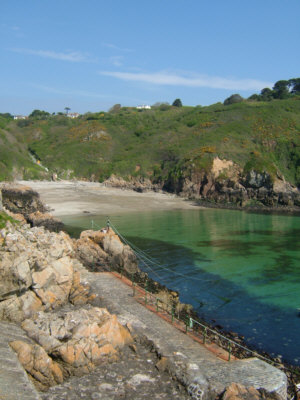
of the island is quite varied with long sandy beaches on the west coast to 100 metre high cliffs along the south coast with
a lot of small coves and fishing ports. The north of the island houses St Sampson, the second town in the island and also
features large areas of common land, the racecourse and one of the three golf courses. The east coast is dominated by
the capital town of St Peter Port, which rises from the harbour and nestles on a steep cliff like many French towns. St Peter Port, has managed to retain its seventeenth-century charm and the
High Street still has its original cobbles. The granite buildings now occupied by shops were originally the homes of the wealthy.There
is plenty to see and it is all readily accessible by car, bus, bicycle or on foot. |
|
|